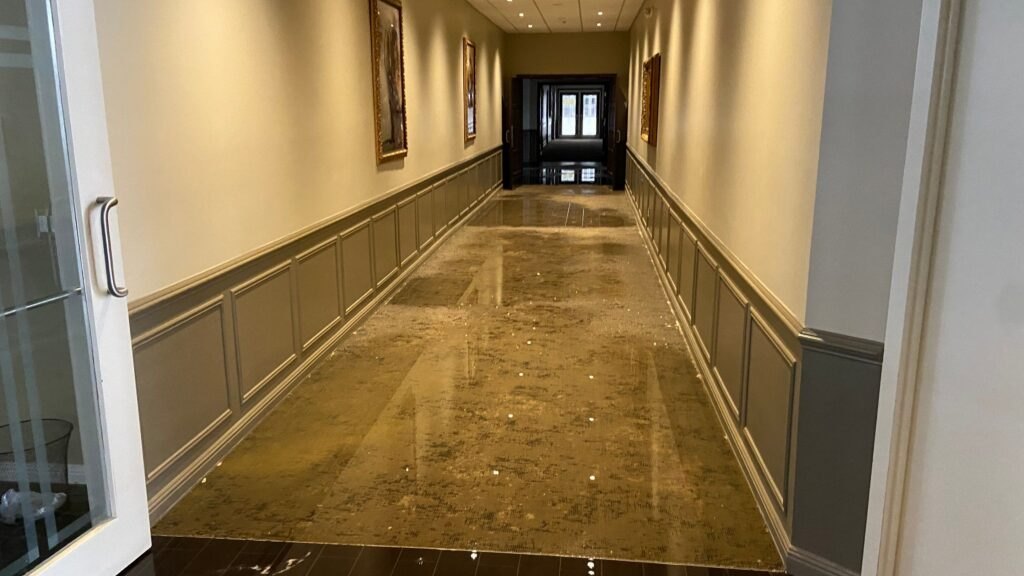
When you find burst pipe water damage, shut off the main water valve first, then cut power to wet areas if you can reach the breaker safely. Next, take photos and video of everything before cleanup, call a licensed plumber and your insurance agent, and start drying the area right away. Speed matters, because mold can begin to grow within a day or two.
In Bloomfield Hills and the rest of Oakland County, a deep January cold snap can freeze a pipe in an outside wall, a crawl space or an unheated room. Often nobody notices until the pipe thaws and water starts running into the ceiling, the finished basement or the hardwood. Here’s what to do in the first hours, how insurance usually treats burst pipes in Michigan, and how to lower the chances of it happening again.
Key Takeaways
- Turn off the main water supply first. Know where the shutoff valve is before winter.
- Stay out of standing water near outlets or appliances until the power is off.
- Document the damage before you move or throw anything out.
- Dry wet areas within 24 to 48 hours to help prevent mold.
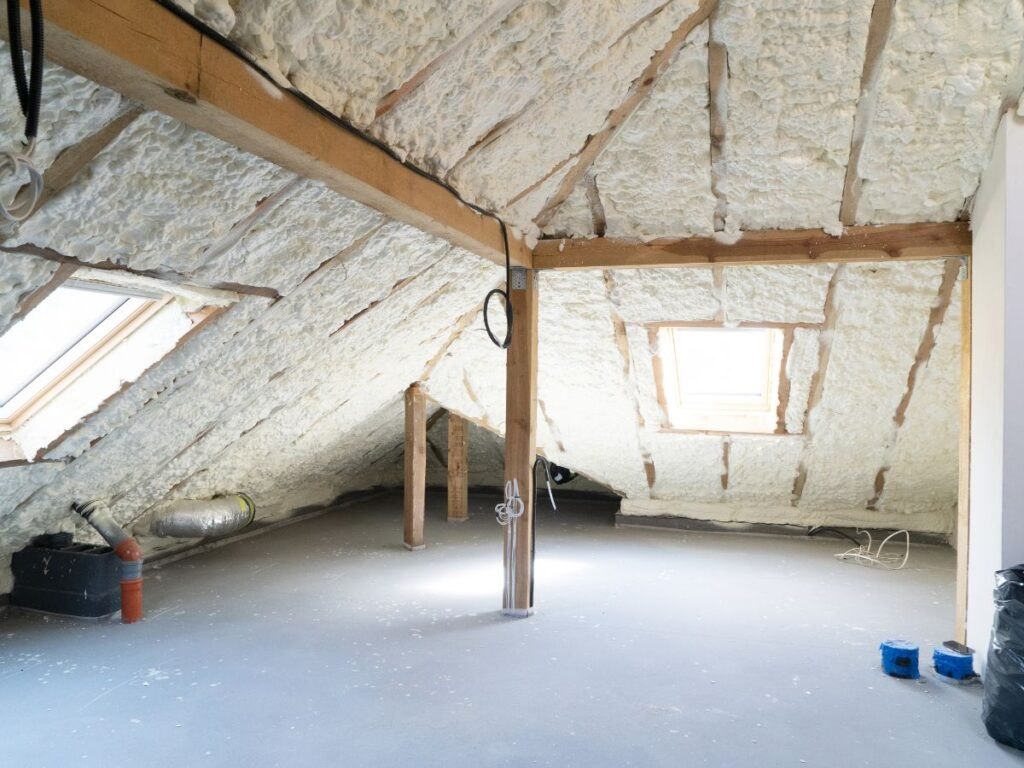
Insulating cold spaces like attics and crawl spaces helps protect the pipes that run through them.
What Should You Do First When a Pipe Bursts?
Stop the water, then make the area safe. Here is the order that helps most:
- Shut off the main water valve. It’s often in the basement near the water meter or where the main line enters the house. Open a faucet to drain the pressure left in the pipes.
- Turn off power to wet areas if you can reach the breaker without stepping in water. If you can’t, stay out and call an electrician or the utility.
- Document everything. Take wide photos and close-ups of the broken pipe, the water and every damaged room, ceiling and item before cleanup begins.
- Call a licensed plumber to repair the pipe and check for other frozen sections.
- Report the loss to your insurer and write down the claim number and who you spoke with.
- Start drying. Remove standing water, move belongings to a dry room, and get air moving.
Keep receipts for anything you spend on emergency steps, such as fans, a wet vacuum or a hotel night. Your insurer may ask for them later.
How Fast Does Burst Pipe Water Damage Turn Into Mold?
Quickly. The U.S. Environmental Protection Agency (EPA) says it’s important to dry water-damaged areas and items within 24 to 48 hours to prevent mold growth. If wet materials are dried in that window, in most cases mold will not grow.
That’s harder than it sounds. Water from a burst pipe runs down inside walls, soaks into insulation and spreads under flooring. Surfaces can feel dry while the drywall, subfloor or cabinet bases behind them stay wet. Professional drying usually includes moisture readings so you know when materials are truly dry, not just dry to the touch.
| Material | What usually happens when wet | What to ask about |
|---|---|---|
| Drywall and insulation | Wicks water upward and holds it | Moisture readings; whether sections need to come out |
| Hardwood floors | Can cup or swell as boards absorb water | Drying the floor and the subfloor beneath it |
| Carpet and pad | Pad soaks up water like a sponge | Whether the pad can be dried or must be replaced |
| Cabinets and trim | Particleboard can swell and break down | Checking behind toe kicks and under sinks |
Does Michigan Homeowners Insurance Cover a Burst Pipe?
Often, yes, for sudden damage, but it depends on your policy and the circumstances. Michigan’s Department of Insurance and Financial Services (DIFS) says standard homeowners policies cover a wide range of winter-related disasters, including burst pipes and ice dams, and that flood damage is excluded from most standard policies. It also notes that coverage for sewer and drain backup may only be available by adding an endorsement.
How the freeze happened can matter. The National Association of Insurance Commissioners (NAIC) explains that policies cover damage from a “sudden and accidental” discharge from plumbing, and generally require keeping the home at a minimum temperature or shutting off the water if the home is vacant. If an insurer decides the plumbing was neglected, the damage may not be covered.
Read your policy and ask your agent about your deductible, any water or mold limits, and what documentation they need. This is general information, not legal or insurance advice.
Which Pipes Are Most Likely to Freeze?
Pipes in cold, unprotected spots freeze first. The American Red Cross points to pipes exposed to severe cold, like outdoor hose bibs and sprinkler lines, and pipes that run against exterior walls with little or no insulation. Plumbing in attics, crawl spaces, garages and rooms over unheated spaces is also at risk.
Larger homes with additions, bonus rooms over garages or long runs to a far bathroom can have more of these weak spots. If one pipe freezes, the Red Cross advises checking the other faucets in the house, because others may be frozen too.
How Can You Help Prevent Frozen Pipes This Winter?
A few steps before and during cold snaps make a big difference:
- Keep the heat on. DIFS suggests keeping your home at least 65 degrees to help prevent frozen pipes, and the Red Cross says to leave the heat no lower than 55 degrees if you’re away.
- Have someone check the house if you travel, so a problem is caught early.
- Insulate exposed pipes in attics, basements and crawl spaces with pipe sleeves or approved heat cable.
- Let a faucet drip on very cold nights when it’s served by exposed pipes.
- Open cabinet doors under sinks on outside walls so warm air can reach the plumbing.
- Disconnect garden hoses and drain outdoor lines before freezing weather.
If a faucet only trickles, the Red Cross says to suspect a frozen pipe, keep the faucet open, and apply gentle heat with a hair dryer, heating pad or towels soaked in hot water. Never use a torch or other open flame. Call a licensed plumber if you can’t find or reach the frozen section.
How Bloomfield Construction Can Help
Bloomfield Construction handles water damage restoration and helps homeowners through the insurance claim process in Bloomfield Hills and across Oakland County. We can assess the damage, document it and talk you through next steps with your insurer. Learn more about our water damage restoration services.
Frequently Asked Questions
Should I call my insurance company or a restoration company first?
Stop the water and make the home safe first. Then report the loss to your insurer promptly and get drying started, since delays can lead to more damage. Read any contract before you sign it, and ask your insurer if you have questions about their process.
Can I dry out a burst pipe leak myself?
Small, surface spills can often be handled with towels, fans and a dehumidifier. Water that has soaked into walls, ceilings, insulation or flooring is harder to dry fully, and hidden moisture can lead to mold.
Is the broken pipe itself covered by insurance?
It depends on your policy. Many policies focus on the resulting water damage rather than the pipe repair. Ask your agent how your coverage treats each part.
What temperature should I keep my house at to prevent frozen pipes?
DIFS suggests at least 65 degrees. The Red Cross says no lower than 55 degrees when you’re away. Rooms with exterior walls or over unheated spaces may need extra attention.
How do I know if a pipe has frozen before it bursts?
A faucet that only trickles on a very cold day is a common clue, according to the Red Cross. Frost on an exposed pipe is another sign. Keep the faucet open and thaw the pipe gently, or call a plumber.
If water from a burst pipe has reached your walls, ceilings or floors, call Bloomfield Construction at (248) 333-3987 or contact us online to set up a visit.