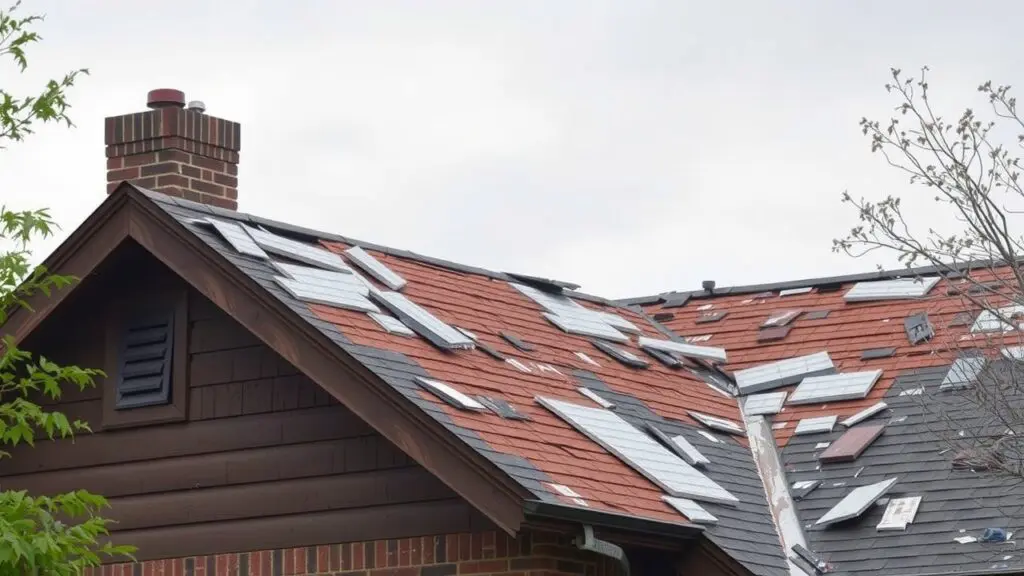
Don’t wait to address storm-damaged roofs, or you could face serious issues. Delaying repairs can lead to leaks, mold growth, and costly structural damage that only gets worse over time. You might notice signs like missing or cracked shingles or indoor water stains. If you’re unsure about the damage, professional help is worth considering. Taking swift action protects your home and investment. Keep exploring to discover how to identify damage and find reliable roofers.
Key Takeaways
- Immediate action after storm damage prevents leaks, mold growth, and costly structural issues in the future.
- Visible signs of damage include missing shingles, indoor water stains, and discoloration on the roof.
- Delaying repairs can lead to escalating costs, reduced property value, and safety hazards.
- Professional evaluations are crucial for identifying hidden roof issues and ensuring a safe inspection.
- Regular maintenance and high-quality materials enhance roof durability and protect your investment.
Why Storm-Damaged Roofs Require Immediate Attention
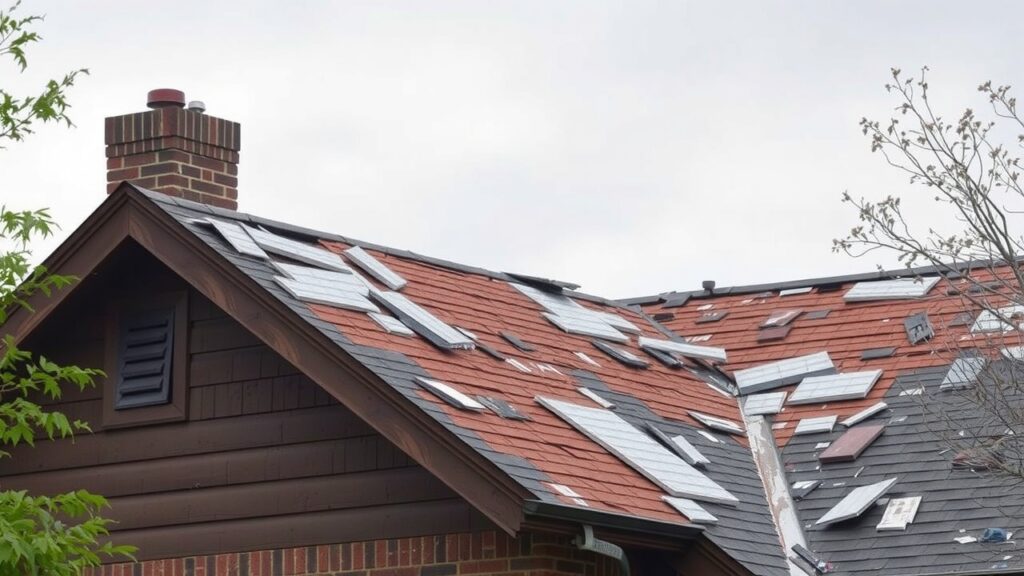
When a storm leaves your roof damaged, it’s crucial to act quickly because delays can lead to more significant problems. The longer you wait, the more susceptible your home becomes to leaks, mold, and structural issues.
Regular roof maintenance can help prevent extensive damage, but in the aftermath of a storm, you’ll likely need emergency repairs.
Regular roof maintenance is essential, but storm damage often requires immediate emergency repairs to prevent further issues.
Addressing these repairs promptly can save you money in the long run and protect your home’s value. You don’t want minor issues to escalate into costly renovations.
Reach out to a professional who can assess the damage and recommend the best course of action. Remember, taking swift action now can prevent a disaster down the road, ensuring your home remains safe and secure.
How to Identify Signs of Roof Damage After a Storm
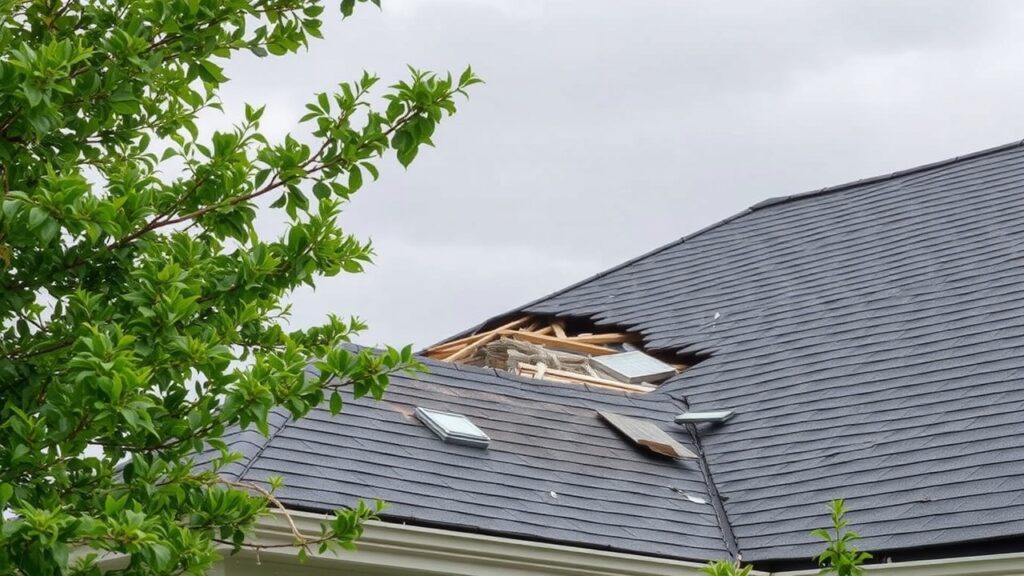
After a storm, you should check for visible shingle damage on your roof.
Look for missing, cracked, or curled shingles, as these can lead to leaks.
Also, keep an eye out for water stains indoors, which might indicate that your roof isn’t protecting your home as it should.
Visible Shingle Damage
Identifying visible shingle damage is essential for maintaining your roof’s integrity after a storm. Start by inspecting your roof from the ground or a ladder, looking for missing, cracked, or curled shingles. These signs can greatly shorten your shingles’ lifespan and compromise your roof’s protection.
Pay attention to loose granules collecting in gutters, as this indicates wear. If you spot discoloration or dark patches, it may signal underlying issues. Regular roof maintenance helps prevent these problems from escalating, so don’t overlook minor damage.
Addressing visible shingle damage promptly guarantees your roof remains strong and effective against future storms. Remember, a well-maintained roof not only enhances your home’s value but also provides peace of mind during stormy weather.
Water Stains Indoors
Visible shingle damage can often lead to problems inside your home. One of the first signs you might notice is water stains on your ceilings or walls.
These stains can indicate water stain causes like leaks from damaged roofing materials. You should check for yellowish or brownish spots, as they typically signal moisture intrusion.
Don’t ignore these signs; they could lead to more severe issues like mold growth or structural damage. For effective moisture detection, look for damp areas or peeling paint, which can be clues of hidden leaks.
If you spot any of these indicators, it’s essential to address them promptly to prevent further damage and guarantee your home stays safe and dry.
The Hidden Dangers of Ignoring Roof Issues
Ignoring roof issues can lead to a cascade of problems that go far beyond just a leaky ceiling. You mightn’t see the hidden risks at first, but they can escalate quickly.
Water infiltration can damage insulation, promoting mold growth and compromising your indoor air quality. Structural issues can arise as moisture weakens beams and supports, leading to costly repairs down the line.
Additionally, pests may find their way in, creating further destruction. The long-term consequences of neglecting roof repairs often outweigh the immediate inconvenience, potentially costing you your home’s value and safety.
The Costs of Delaying Roof Repairs
When you put off roof repairs, you’re not just risking further damage; you’re also opening the door to increased repair costs.
Over time, minor issues can escalate, leading to bigger and more expensive problems.
Plus, a damaged roof can dramatically lower your property value, making timely repairs essential.
Increased Repair Expenses
Delaying roof repairs can lead to escalating costs that strain your budget. When you put off fixing that leak or damaged shingle, small issues can turn into major problems.
Water intrusion can damage your home’s interior, leading to unexpected costs like mold remediation or structural repairs. These expenses can quickly exceed your initial repair budgets, leaving you with a hefty financial burden.
Additionally, materials and labor prices may rise over time, further increasing your repair expenses. By addressing roof damage promptly, you not only prevent additional costs but also preserve your home’s integrity.
Don’t wait until it’s too late; tackling repairs now can save you money in the long run. Prioritize your roof and protect your investment!
Property Value Decline
Neglecting roof repairs can greatly impact your property’s value, as potential buyers often view a damaged roof as a red flag. This can lead to a decline in the property market, limiting your home equity. You might think you’re saving money by postponing repairs, but the opposite is true.
| Consequence | Impact on Property Value | Home Equity Loss |
| Visible Damage | Decreases buyer interest | High |
| Water Damage | Costly repairs later | Moderate |
| Mold Growth | Health concerns | Significant |
| Insurance Issues | Higher premiums | Major |
Taking action now can preserve your investment and maintain your property’s worth in the long run. Don’t wait—repair that roof!
How to Assess Roof Damage: Do It Yourself or Hire a Professional?
How can you determine if your storm-damaged roof needs immediate attention or if you can tackle the assessment yourself? Start with a DIY assessment.
Check for visible signs like missing shingles, leaks, or sagging. Use binoculars for a closer look without climbing onto the roof.
Look for obvious damage like missing shingles or leaks, and use binoculars for a safe, closer inspection.
If you spot significant damage or feel uncertain, it’s time for a professional evaluation. Professionals have the expertise to identify hidden issues and guarantee safety during the inspection.
Remember, while a DIY assessment might save you money, a professional can provide a thorough understanding of the damage and necessary repairs.
If in doubt, don’t hesitate to call an expert; addressing roof damage promptly can prevent further issues down the road.
Documenting Storm-Damaged Roofs for Insurance Claims
What steps should you take to effectively document storm damage to your roof for an insurance claim?
First, take clear photos of the damage from multiple angles. Make certain to capture the entire roof and any interior damage caused by leaks.
Next, write a detailed description of what you see, including dates and weather conditions during the storm.
Obtain a copy of your insurance policy for reference, as it outlines coverage details.
If you can, get a professional assessment to include in your insurance documentation.
Finally, organize all your evidence neatly, as this will streamline the claim process.
Having thorough documentation increases your chances of a successful claim and helps guarantee you receive the compensation you deserve.
Temporary Fixes: What You Can Do Until Help Arrives
When your roof gets damaged, it’s essential to assess the situation right away.
You can use tarps to cover leaks, and make sure to remove any debris safely to prevent further issues.
Taking these steps can protect your home until professional help arrives.
Assess Damage Immediately
After a storm, evaluating roof damage immediately is crucial to prevent further issues.
Start your storm response by inspecting your roof from the ground. Look for visible signs like missing shingles, leaks, or sagging. If it’s safe, use a ladder to get a closer look, but prioritize your roof safety. Avoid climbing onto the roof unless absolutely necessary.
Document any damage with photos for your insurance claims. If you notice serious issues, consider reaching out to professionals right away.
In the meantime, keep an eye on leaks or water stains inside your home. Taking these steps can help minimize damage and guarantee you’re prepared for repairs when help arrives.
Stay proactive to protect your home!
Use Tarps Effectively
Using tarps effectively can be a lifesaver for your roof in the aftermath of a storm, especially if you’re waiting for professional help. Proper tarp placement is essential; cover the damaged area and extend the tarp beyond the edges to prevent water from seeping underneath. Secure the tarp with weights or nails to keep it in place.
| Task | Tips | Frequency |
| Tarp Placement | Cover the entire area | Once per storm |
| Securing Tarp | Use nails or weights | As needed |
| Tarp Maintenance | Check for tears or wear | Every few days |
| Replacing Tarp | Swap if damaged | As needed |
| Monitoring Water | Inspect for leaks | Daily |
Remove Debris Safely
Storms can leave your roof littered with debris, making it crucial to remove it safely to prevent further damage.
Start by inspecting the area from the ground; never rush onto the roof without evaluating the risk. Use a sturdy ladder and have someone hold it for added stability.
When you’re ready to begin debris removal, wear safety gear like gloves and a hard hat to protect yourself from falling objects. Clear away branches, leaves, and any other materials carefully, avoiding sharp edges and unstable spots.
If you can’t reach certain areas, consider waiting for professional help. Remember, safety precautions are essential to guarantee you don’t injure yourself while trying to protect your home from further damage.
What Are the Best Long-Term Fixes for Your Roof?
When your roof suffers damage, addressing the issue promptly can prevent further problems down the line.
Consider your roof replacement options carefully. Investing in high-quality materials can guarantee longevity and durability, reducing the need for frequent repairs.
Think about energy efficiency upgrades, too; installing reflective roofing materials or adding insulation can lower your energy bills while enhancing your home’s comfort.
Consider energy efficiency upgrades like reflective roofing and insulation to reduce bills and improve home comfort.
Additionally, you might want to explore options like metal or synthetic shingles, which often offer better resilience against harsh weather.
Regular inspections and maintenance are essential for long-term care as well.
By proactively managing your roof, you’ll not only protect your investment but also enhance your home’s overall value and performance.
Don’t wait—take action now!
How to Choose a Reliable Roofer After a Storm
How can you find a reliable roofer after your home has been hit by a storm? Start by checking the roofing credentials of potential contractors. Look for licenses, insurance, and certifications that show they meet industry standards.
Next, read contractor reviews online to gauge their reputation. Pay attention to feedback about their workmanship, timeliness, and customer service. Don’t hesitate to ask for references from past clients; a trustworthy roofer should readily provide them.
Get multiple quotes to compare pricing and services, but remember that the lowest bid isn’t always the best choice. Finally, verify your roofer communicates clearly and promptly, as good communication is essential during the repair process.
Your home deserves the best care after a storm!
Preventing Future Storm Damage to Your Roof
After finding a reliable roofer to repair storm damage, it’s time to think about protecting your roof from future weather events.
Start by opting for storm proof materials during your next roofing project. These materials are designed to withstand harsh conditions, giving your roof a better chance against severe storms.
Opt for storm proof materials for your roofing project to enhance durability against severe weather conditions.
Additionally, schedule regular inspections to catch potential issues early. A professional can identify wear and tear or damage that might go unnoticed, allowing you to address problems before they escalate.
Don’t wait for the next storm to find out your roof isn’t up to par. By investing in quality materials and staying proactive with inspections, you can help guarantee your roof remains resilient against future storms.
How Your Home Insurance Covers Storm-Damaged Roofs
Understanding how your home insurance covers storm-damaged roofs can save you from unexpected expenses and stress. Your policy typically includes coverage for roof damage due to storms, but it’s essential to know your coverage limits.
| Coverage Type | What It Covers | Coverage Limits |
| Dwelling Coverage | Repairs to your home’s structure | Varies by policy |
| Personal Property | Damage to belongings inside your home | Often a percentage |
| Additional Living | Temporary housing if home’s unlivable | Typically 20% |
Check your policy details to understand what’s included and whether you need additional coverage. Knowing this information helps you make informed decisions after a storm hits. Don’t wait—act promptly to secure your home!
Frequently Asked Questions
How Can I Tell if My Roof Is Beyond Repair?
To determine if your roof’s beyond repair, schedule a roof inspection. Look for extensive leaks, sagging, or missing shingles. High repair costs compared to a replacement often indicate it’s time to contemplate a new roof.
What Should I Do if My Roof Is Leaking?
If your roof’s leaking, act fast! Perform emergency repairs by covering the area with a tarp to prevent further water damage. Then, contact a roofing professional to assess and fix the leak properly.
How Often Should I Inspect My Roof for Damage?
You should inspect your roof at least twice a year as part of your maintenance schedule. Regular roof inspections help catch damage early, preventing costly repairs and extending your roof’s lifespan. Don’t overlook this essential task!
Can Storm Damage Affect My Home’s Interior?
Yes, storm damage can definitely affect your home’s interior. Water infiltration from a damaged roof can lead to significant interior damage, including mold growth, structural issues, and compromised insulation. It’s essential to address roof problems promptly.
What Are the Signs of Poor Roofing Workmanship?
Signs of poor roofing workmanship include visible gaps, sagging areas, and shoddy materials. If you notice leaks or improper installation, it’s essential to address these issues quickly to prevent further damage to your home.
Final Thoughts
Storm-damaged roofs rarely stay “small” problems for long. Acting quickly helps prevent leaks, mold, and structural issues, while also making it easier to document damage properly for your insurance claim. If you’re seeing missing shingles, water stains, or any signs of impact, schedule a professional inspection now so you can protect your home and avoid escalating repair costs.
For expert storm-damage repairs and insurance support, contact Bloomfield Construction & Restoration. Explore our Roofing services and Insurance Restoration to see how we handle everything from inspection to restoration, and review completed projects in our Portfolio. When you’re ready, request an inspection or ask a question through our Contact Form.