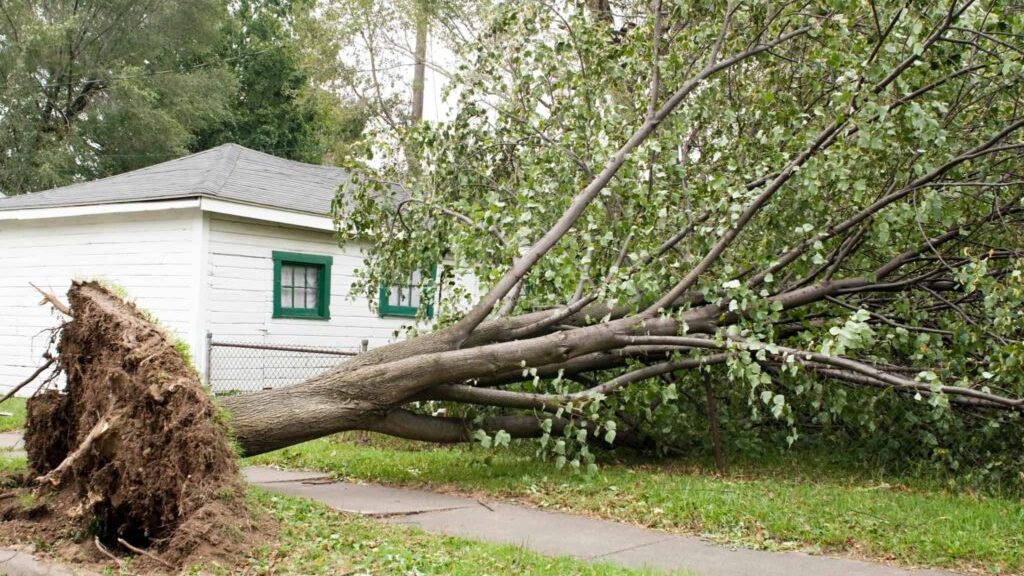
If a tree fell on your house, get everyone out of the damaged area first, stay well away from any downed power lines, and call 911 if anyone is hurt or you smell gas. Once it’s safe, photograph the damage, call your insurance company to start a claim, and only make temporary repairs, like a tarp, until the adjuster has seen it.
Bloomfield Hills is known for big, mature trees on large lots, which is part of its charm. It also means a heavy wet snow, an ice storm or a spring windstorm can bring a large limb or a whole trunk down on a roof. This guide covers what to do in the first hours, how homeowners insurance usually treats fallen trees in Michigan, and how the repair and restoration process works.
Key Takeaways
- Safety first: leave the damaged rooms, stay at least 25 feet from downed lines, and call 911 for injuries, fire or a gas smell.
- Don’t climb on the roof or try to cut a tree that’s resting on the house.
- Document the damage with photos and video before anything is moved.
- Standard homeowners policies generally cover tree damage to the house from wind, lightning or hail, no matter whose tree it was.
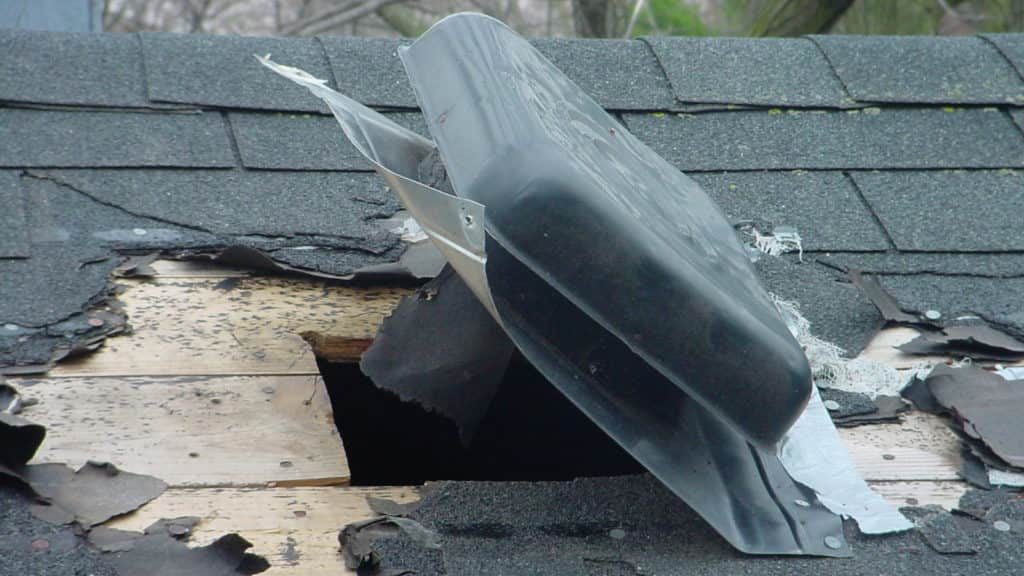
Cover openings with a tarp to keep rain and snow out until permanent repairs can start.
A Tree Fell on Your House: What Should You Do First?
Your first job is to keep people safe. A tree on a roof can shift, a ceiling can sag, and broken lines may still carry power. Take these steps in order:
- Get out of the damaged area. Move everyone, including pets, away from the rooms under the impact. If the structure looks unstable, leave the house.
- Watch for power lines. DTE Energy advises staying at least 25 feet away from a downed line and anything it touches, and treating every line as live. Report it to DTE, and call 911 if it’s an emergency.
- Call 911 if anyone is injured, if you smell gas, or if you see sparks or fire.
- Shut off utilities to the damaged area only if you can do it safely.
Don’t climb onto the roof or start cutting the tree yourself. A trunk resting on a house is under tension, and cutting it the wrong way can drop it further into the structure or onto you. Tree removal from a roof is a job for a qualified crew.
How Do You Protect Your Home Until Repairs Start?
The next goal is to stop more damage, especially from rain and snow getting inside. The Michigan Department of Insurance and Financial Services (DIFS) advises homeowners to take steps to protect the property and prevent further loss if it’s safe, and to keep receipts for any supplies they buy.
Temporary protection usually means:
- Tarping the roof opening once the tree is off or secured
- Boarding up broken windows or doors
- Moving furniture, electronics and keepsakes away from wet areas
- Starting water removal and drying if rain or melting snow got in
Hold off on permanent repairs until your insurance company has inspected the damage. Water that soaks into insulation, drywall or hardwood can lead to mold, so drying should start quickly even while the claim is being sorted out.
Does Homeowners Insurance Cover a Tree That Fell on Your House?
In most cases, yes. The Insurance Information Institute (III) says a standard homeowners policy covers damage to your home and its contents when a tree hits it, including trees felled by wind, lightning or hail. It also covers a detached garage or other insured structure.
A few points surprise people:
- It doesn’t matter whose tree it was. III says you file with your own insurer even if the tree came from a neighbor’s yard. Your insurer may later try to recover from the neighbor’s insurer.
- Tree removal is often covered only when the tree hit a structure. If it just fell in the yard, removal generally isn’t covered unless it blocks a driveway or ramp, according to III.
- Neglect can be a problem. III notes that poor maintenance isn’t covered, so a long-dead tree may be treated differently than a healthy one that came down in a storm.
Every policy is different, so read yours and ask your agent about your deductible and limits. DIFS runs a consumer hotline at 877-999-6442 for insurance questions.
How Do You Document the Damage for Your Claim?
Good records make the claim smoother. DIFS recommends taking pictures or video of the damage and not throwing away damaged items until your insurance company says it’s okay. Then call your insurer’s claims line or your agent with your policy number ready.
Helpful things to capture:
- Wide photos of the tree on the house from several angles, plus close-ups of the roof, siding, gutters and windows
- Inside damage: ceilings, walls, floors and any wet insulation
- Damaged belongings, with model numbers where you can
- Receipts for tarps, boards, hotel stays or other emergency purchases
DIFS also has an Insurance Claims Tracking Sheet for logging your claim number, adjuster contact and every conversation.
How Can You Avoid Storm-Chaser Contractors?
DIFS warns that after severe weather, fraudsters often go door to door posing as adjusters, contractors or other service providers. They may promise debris cleanup or repairs that never get finished, or that are done with poor materials and workmanship.
Protect yourself by contacting your insurance company before you hire anyone, checking a contractor’s license, references and insurance, and never signing something you haven’t read. DIFS also notes that adjusters work for and are paid by your insurance company and should never ask you to pay them for services your policy covers.
How Bloomfield Construction Can Help
Bloomfield Construction handles roof replacement and repair, siding, water damage restoration and insurance claims help for homes across Oakland County. After a tree comes down on a house, our team can assess the roof and structure, document what we find, and work with you through the restoration and claim process. Learn more about our insurance restoration services.
Frequently Asked Questions
Who do I call first if a tree falls on my house?
Call 911 if anyone is hurt, you smell gas or a line is down near the house. Report downed lines to DTE. Once everyone is safe, call your insurance company to open a claim.
Is it safe to stay in the house after a tree falls on it?
It depends on the damage. If ceilings are sagging, walls are cracked, or the tree went through the roof, leave until a professional checks the structure. Stay out of any room under the impact.
What if my neighbor’s tree fell on my house?
You usually file with your own homeowners insurance. Your insurer may then seek repayment from your neighbor’s insurer, which could get your deductible back if it succeeds.
How can I lower the chance of a tree falling on my roof?
Have large trees near the house checked by a certified arborist, especially ones that lean, have dead limbs or show cracks. Keeping trees healthy also matters for insurance, since poor maintenance isn’t covered.
If a tree has damaged your roof or home, call Bloomfield Construction at (248) 333-3987 or contact us online to set up an inspection.