
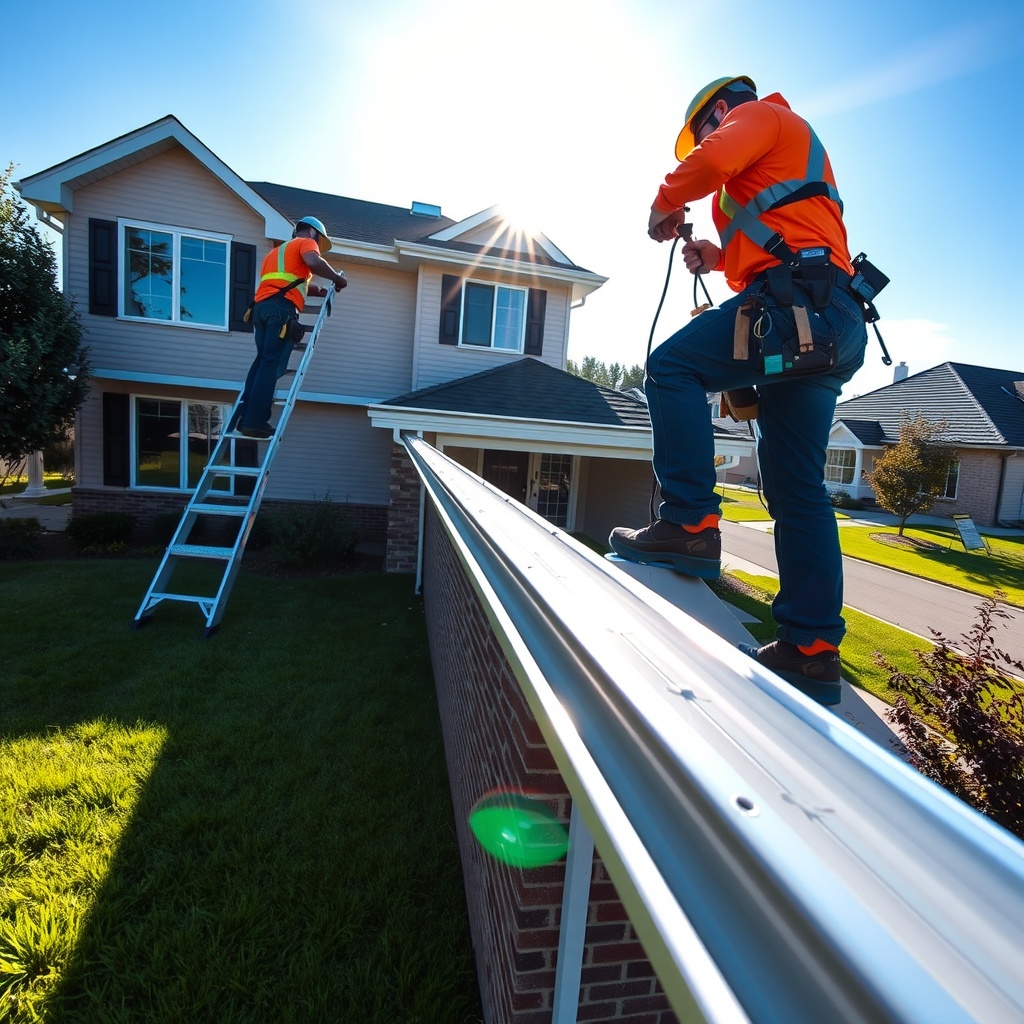
To install seamless gutters professionally, start by gathering essential tools and materials like aluminum or copper gutters and a level. Measure your home’s perimeter for accurate lengths and choose a slight slope for drainage. Clear the installation area and confirm your ladder’s stability. Place downspouts at corners, spacing them every 20-30 feet for ideal runoff. Secure hardware properly and avoid misalignment. Following these steps guarantees efficient water management, and there’s much more to explore for a flawless installation.
Key Takeaways
- Measure the home’s perimeter accurately, ensuring a slope of 1/4 inch per 10 feet for effective water flow towards downspouts.
- Prepare the work area by clearing obstacles and ensuring ladder stability for safe access during installation.
- Position downspouts at corners and spaced every 20-30 feet, directing them away from landscaping to optimize drainage.
- Use high-quality materials and fasteners, ensuring all connections are secure to prevent leaks and enhance stability.
- Allocate sufficient time for installation, allowing for careful sealing of joints and adjustments to maintain proper slope.
Understanding Seamless Gutters: Key Benefits and Features

When you consider upgrading your home’s drainage system, seamless gutters stand out for their efficiency and aesthetic appeal. Unlike traditional gutters, which are prone to leaks at joints, seamless gutters are custom-made from durable gutter materials, reducing the risk of water damage to your home. This continuity not only enhances functionality but also provides a cleaner, more polished look.
Installation benefits are significant, too. Seamless gutters minimize maintenance needs since there are fewer joints to clean and repair. They’re designed to fit your home perfectly, ensuring peak performance in diverting rainwater away from your foundation.
Plus, many seamless gutter systems come with protective features, like gutter guards, to prevent debris buildup. Choosing seamless gutters means investing in a reliable drainage solution that enhances your home’s value while providing peace of mind during heavy rainstorms.
Tools and Materials You’ll Need for Seamless Gutter Installation
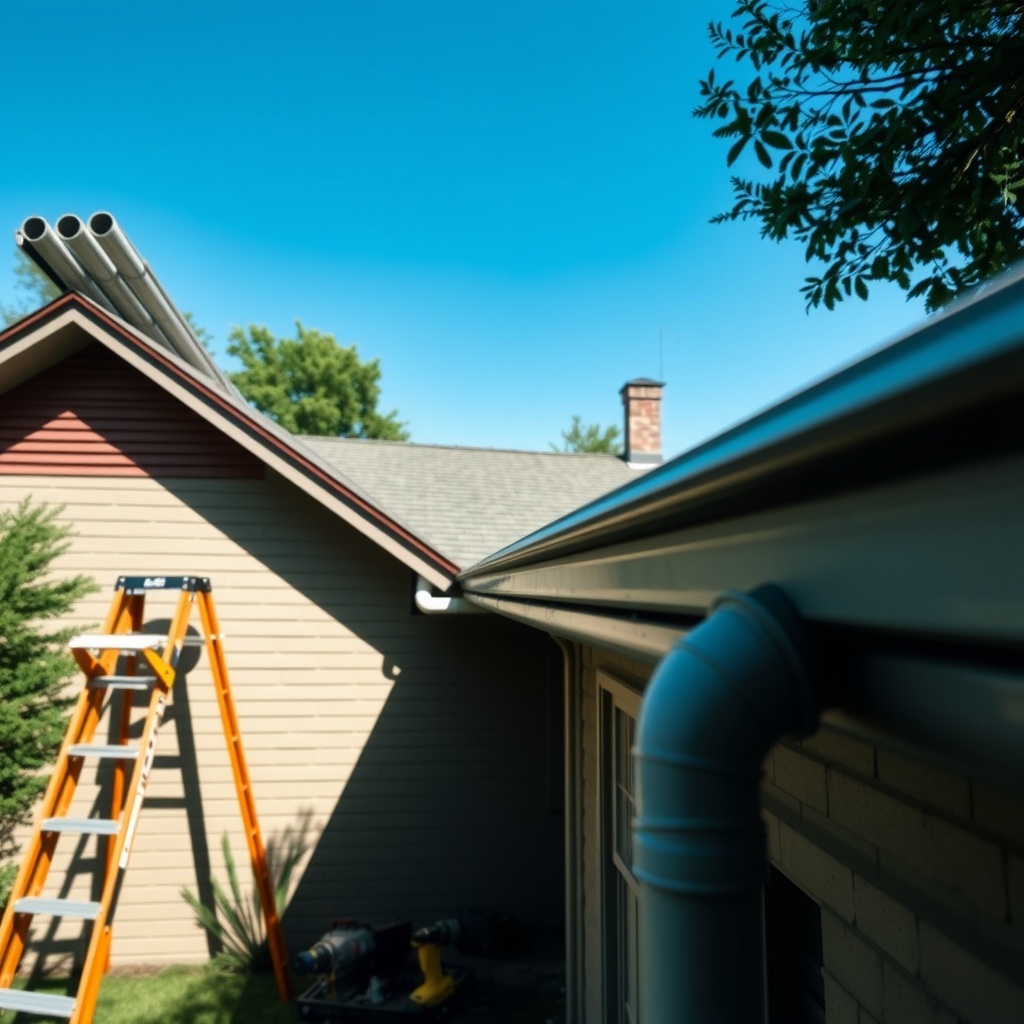
Upgrading to seamless gutters requires the right tools and materials to guarantee a successful installation. First, you’ll need quality gutter materials, typically aluminum or copper, which are durable and rust-resistant. Choose the right gauge based on your area’s weather conditions.
Next, gather essential installation tools: a measuring tape to confirm accurate lengths, a miter saw for precise cuts, and a level to maintain proper alignment. A drill will help you secure the gutters, while a ladder or scaffolding is essential for reaching high spots safely.
Don’t forget safety gear—gloves and goggles protect you during the process. A downspout crimper will also be handy for connecting sections.
With these tools and materials in hand, you’re all set for a smooth installation experience. Proper preparation will make a significant difference in the long-term performance of your seamless gutters.
Measuring Your Home for Accurate Gutter Lengths
To get the right lengths for your seamless gutters, you’ll need some essential tools and techniques.
Start by gathering measuring tools like a tape measure and a level, which will help guarantee accuracy.
Knowing the key measurement techniques can make all the difference in achieving a perfect fit for your home.
Tools Needed For Measuring
Accurate measurements are essential for a successful gutter installation, so having the right tools on hand can make all the difference.
To guarantee you measure correctly, you’ll need a few key measurement tools that facilitate proper measuring techniques.
- Tape Measure: A durable tape measure allows you to easily gauge lengths around your home’s perimeter.
- Level: This helps you check that the gutters will slope correctly for ideal water flow.
- Ladder: A sturdy ladder provides safe access to high areas for accurate measurements.
With these tools, you can confidently measure your home, guaranteeing your seamless gutters fit perfectly and function effectively.
Proper measurements lead to a more efficient installation and long-lasting results.
Key Measurement Techniques
Measuring your home for gutter lengths is essential to ensuring a proper fit and effective drainage. Start by determining the total length of each section where gutters will be installed. Use a tape measure for precise measurement accuracy.
It’s important to account for the gutter slope; a slight slope allows water to flow toward the downspouts. Typically, aim for a slope of about 1/4 inch for every 10 feet of gutter.
Make sure to measure around any obstructions, like chimneys or trees, and include any necessary angles. Double-check your measurements to avoid costly errors.
Prepare Your Home for Gutter Installation Safely
Before your gutter installation begins, ensuring your home is ready can make all the difference. Taking a few safety precautions not only protects your property but also the installation team.
Here are three essential steps to prepare your home safely:
- Clear the Area: Remove any obstacles around your home’s perimeter. This includes furniture, planters, or decorations that might hinder access.
- Inspect Safety Equipment: Make sure any safety equipment is available and in good condition. This includes harnesses and hard hats for the installation team.
- Ensure Ladder Stability: If ladders are needed, check their stability and make sure they’re on level ground. A secure ladder is vital for preventing accidents during installation.
How to Install Your Gutter System in Easy Steps
With your home prepared and safety measures in place, it’s time to install your gutter system. Start by measuring the length of the eaves where the gutters will go, ensuring you account for any slopes. Cut your gutter sections to fit, and then join them using connectors. Secure the gutter to the fascia board using brackets spaced every two feet.
Next, install the end caps on both ends of the gutters to prevent water leakage. Make sure the gutters slope slightly toward the downspouts for effective drainage.
Once everything’s in place, check for any gaps and seal them with silicone caulk.
Finally, remember to perform seasonal inspections and follow gutter maintenance tips to keep your system functioning well. This includes clearing debris and checking for any signs of damage.
A well-installed gutter system will protect your home for years to come!
How to Place Downspouts for Optimal Drainage?
When planning your downspout locations, consider where water naturally flows to guarantee ideal drainage.
You’ll want to angle your downspouts effectively and maintain proper spacing between them for maximum efficiency.
This approach helps prevent water buildup and protects your home’s foundation.
Ideal Downspout Locations
To guarantee your gutter system functions effectively, placing downspouts in the right locations is essential. Proper downspout placement directly impacts drainage efficiency, preventing water buildup around your foundation.
Here are three key tips for ideal downspout locations:
- Corner Placement: Situate downspouts at corners of your home to maximize water diversion away from the foundation.
- Spacing: Space downspouts every 20-30 feet along the gutter to guarantee effective runoff management.
- Avoiding Obstructions: Ensure downspouts direct water away from landscaping, driveways, and walkways to prevent erosion and pooling.
Angle for Effective Drainage
Placing downspouts at the right angle is essential for optimal drainage. To achieve maximum drainage efficiency, make sure your downspouts align with the gutter pitch, directing rainwater flow away from your home’s foundation.
A slight angle, usually around 45 degrees, can help facilitate smooth water movement. When positioning your downspouts, consider their installation angle carefully; it should encourage gravity to do its job without creating pooling.
Avoid sharp bends or kinks in the downspout, as these can disrupt flow and lead to clogs. By maintaining the correct angle, you’ll enhance drainage efficiency, preventing water damage and erosion around your property.
This small detail can make a significant difference in the overall performance of your gutter system.
Spacing Between Downspouts
Properly positioning downspouts is just as important as guaranteeing they’re at the right angle.
Downspout spacing directly affects drainage efficiency, so it’s essential to place them strategically. Here are three key considerations to keep in mind:
- Distance from Roof Edge: Ideally, place downspouts no more than 30 feet apart to prevent water pooling.
- Slope of the Ground: Make sure downspouts are directed toward lower areas to enhance water flow away from your home.
- Gutter Capacity: Factor in the gutter size; larger gutters may require more spaced downspouts for effective drainage.
Avoid These Common Gutter Installation Mistakes
While installing gutters might seem straightforward, many homeowners overlook critical steps that can lead to costly mistakes. One common error is improper gutter material selection. Whether you choose aluminum, vinyl, or copper, make sure it suits your climate and home style. Poor choices can diminish durability and performance.
Improper gutter material selection can lead to costly mistakes; ensure your choice suits both your climate and home style.
Another mistake isn’t considering the installation timeline. Rushing through the process can lead to misaligned gutters or inadequate sealing. Take your time to measure correctly and plan the layout, making certain downspouts are evenly spaced to prevent overflow.
Additionally, avoid neglecting the slope. Gutters should have a slight pitch towards the downspouts for proper drainage.
Finally, don’t skimp on hardware; using quality fasteners will enhance stability. By steering clear of these missteps, you’ll achieve a functional and long-lasting gutter system that protects your home effectively.
Frequently Asked Questions
How Long Does a Seamless Gutter Installation Typically Take?
A seamless gutter installation typically takes one to two days, depending on your home’s size and complexity. You can expect a straightforward project duration, ensuring your home’s drainage system is efficiently updated.
What Are the Best Materials for Seamless Gutters?
The best gutter materials include aluminum, copper, and steel. Each offers unique benefits, so consider your installation options carefully. Aluminum’s lightweight, copper’s durability, and steel’s strength can all enhance your home’s protection and aesthetics.
Can I Install Seamless Gutters in Winter?
Yes, you can install seamless gutters in winter. However, cold temperatures can affect gutter performance, so verify the materials are suitable for winter installation. Proper precautions will help guarantee a successful and durable setup despite the conditions.
How Do I Maintain My Seamless Gutters After Installation?
To maintain your seamless gutters, regularly clean them to prevent clogs. Use maintenance tips like checking for leaks, ensuring proper drainage, and clearing debris. This keeps your system functioning well and prolongs its lifespan.
Are Seamless Gutters Worth the Investment?
Yes, seamless gutters are worth the investment. They offer cost benefits by reducing maintenance and preventing leaks. While installation challenges exist, their durability and efficiency often outweigh initial costs, making them a smart choice for homeowners.
Final Thoughts
A professional seamless gutter installation is one of the smartest ways to protect your roofline, siding, and foundation from water damage. When gutters are measured correctly, pitched for proper flow, and paired with well-placed downspouts, they move water away from your home efficiently and reduce the risk of leaks, erosion, and costly repairs. The details matter—alignment, secure fastening, and careful drainage planning are what turn a gutter system into long-term protection.
AtBloomfield Construction, we help homeowners protect their exterior systems with workmanship you can trust and clear guidance on what your home needs. If your gutters are being installed as part of a larger exterior repair or storm recovery project, our team can also support related work through roofing services and siding services, and assist with documentation and next steps through insurance restoration when applicable.
If you’d like an expert assessment or want help planning your exterior protection upgrades, get started here: Contact Bloomfield Construction.