When the flames are out and the fire trucks pull away, most property owners breathe a sigh of relief. The worst is over, right? Not quite. A quiet second problem is already forming inside the walls, ceilings, and insulation, and it comes from the very thing that saved your building: water. Hundreds of gallons of it, pushed through hoses and sprinklers, soak into materials that were never meant to get that wet. Add the warmth and humidity that linger after a fire, and you have ideal conditions for mold to take hold within a couple of days. This is exactly why professional Fire Damage Restoration Bloomfield Hills property owners can rely on does far more than scrub away soot. It treats moisture as a clock that starts ticking the moment suppression ends. In this guide, we will walk through how mold develops after a fire, why suppression water is so risky, what a good restoration process looks like, and how you can protect your home or business from a second wave of damage. Whether you run a small shop, manage a development, or simply own a home, understanding this link between fire recovery and mold prevention can save you serious money and stress.
Why Mold Follows Fire So Often
It surprises many people to learn that mold is a common companion to fire loss. After all, fire is hot and dry, while mold loves cool and damp. The connection is the response effort. Firefighters need to extinguish flames quickly, and that means applying large volumes of water to structural materials, often well beyond the area that actually burned. Sprinkler systems add to the total, and hot spots hidden in walls may be soaked just to be safe.
Once the fire is out, that water has nowhere to go. It settles into drywall, wood framing, carpet padding, and insulation. Meanwhile, smoke and ash leave behind organic residue that mold spores can feed on. Spores are already present in almost every indoor environment, waiting for moisture and a food source. A fire provides both in abundance. This is why a thorough approach to fire damage always includes managing the water left behind, not just the char and soot you can see.
The Timeline: How Fast Moisture Becomes a Mold Problem
A common rule of thumb in the restoration industry is that mold can begin to develop within roughly 24 to 48 hours when materials stay wet and warm. That does not mean a visible colony appears overnight, but the early stages of growth can begin quickly, and they become harder to reverse the longer moisture lingers. Every hour of delay narrows your options.
This is also why waiting on insurance paperwork before calling a restoration team can backfire. The documentation process matters, but moisture does not pause while you wait for a callback. Many property owners find that securing the site, starting extraction, and setting up drying equipment early can be coordinated alongside the claims process rather than after it.
Local conditions also play a role. Michigan summers can be humid, and basements or lower levels may already hold residual moisture before a fire ever happens. In those cases, Fire Damage Restoration Bloomfield Hills teams often adjust drying plans to account for the surrounding climate, since outdoor humidity can slow evaporation indoors.
Hidden Moisture Pockets Inside Walls and Ceilings
The most dangerous moisture is the kind you cannot see. Water from suppression efforts travels downward through floors, along framing, and into wall cavities. Ceilings below a burned room often absorb water that pools in insulation, creating damp pockets that stay hidden behind intact-looking drywall.
Professionals use moisture meters, thermal imaging cameras, and sometimes borescope inspections to locate wet areas without tearing apart the entire structure. These tools reveal temperature differences and moisture readings that the naked eye simply cannot detect. A wall may look perfectly dry yet hold elevated moisture in the lower few inches, right where mold likes to start.
Once wet zones are mapped, the team decides what can be dried in place and what must be removed. Saturated insulation, soaked carpet padding, and swollen drywall are typical removal candidates. Taking out these materials early prevents them from becoming a long-term moisture reservoir. It can feel like a dramatic step, but removing a small section of wet drywall now is far cheaper than opening an entire wall later after mold spreads behind it.
Water Extraction and Structural Drying Done Right
The first practical step in mold prevention is getting standing water out fast. Truck-mounted or portable extraction units remove bulk water from floors, subfloors, and low areas. After that, the real work shifts to controlled drying, which is both a science and an art.
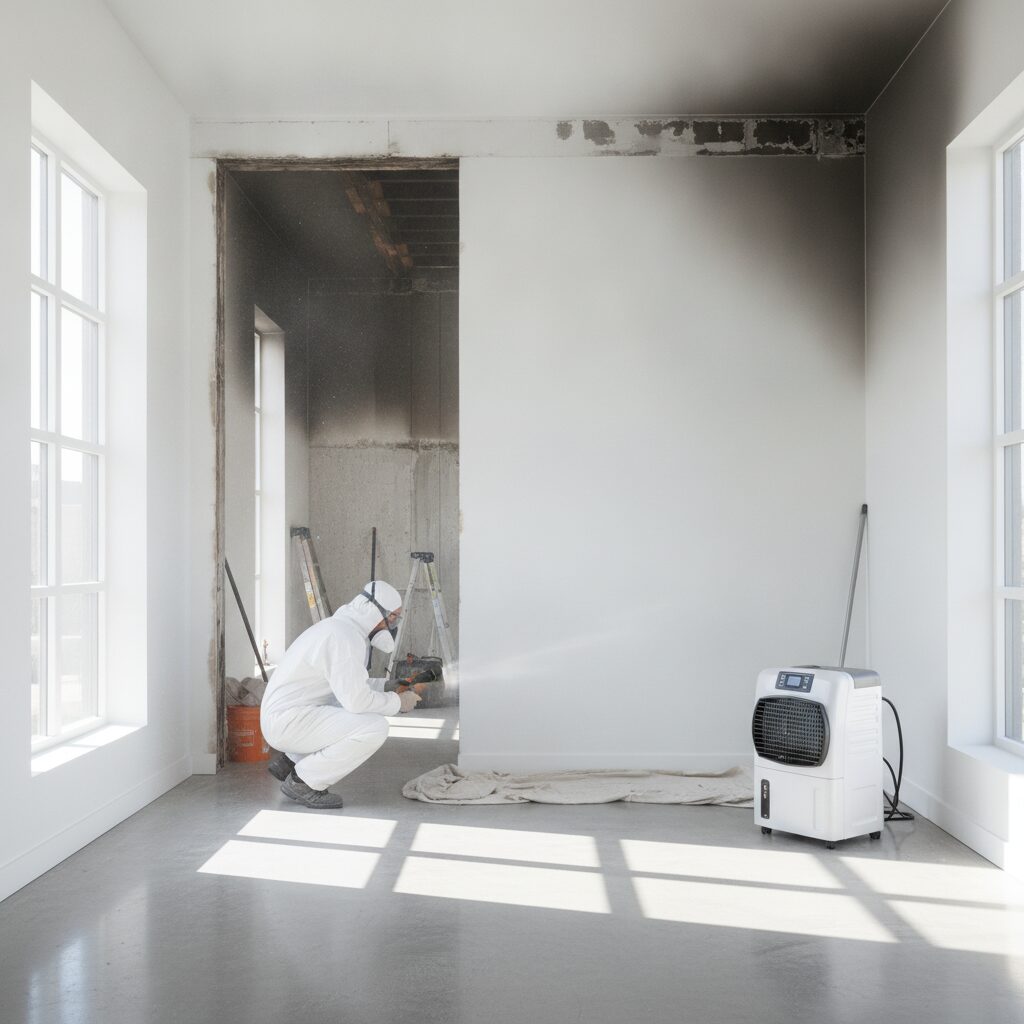
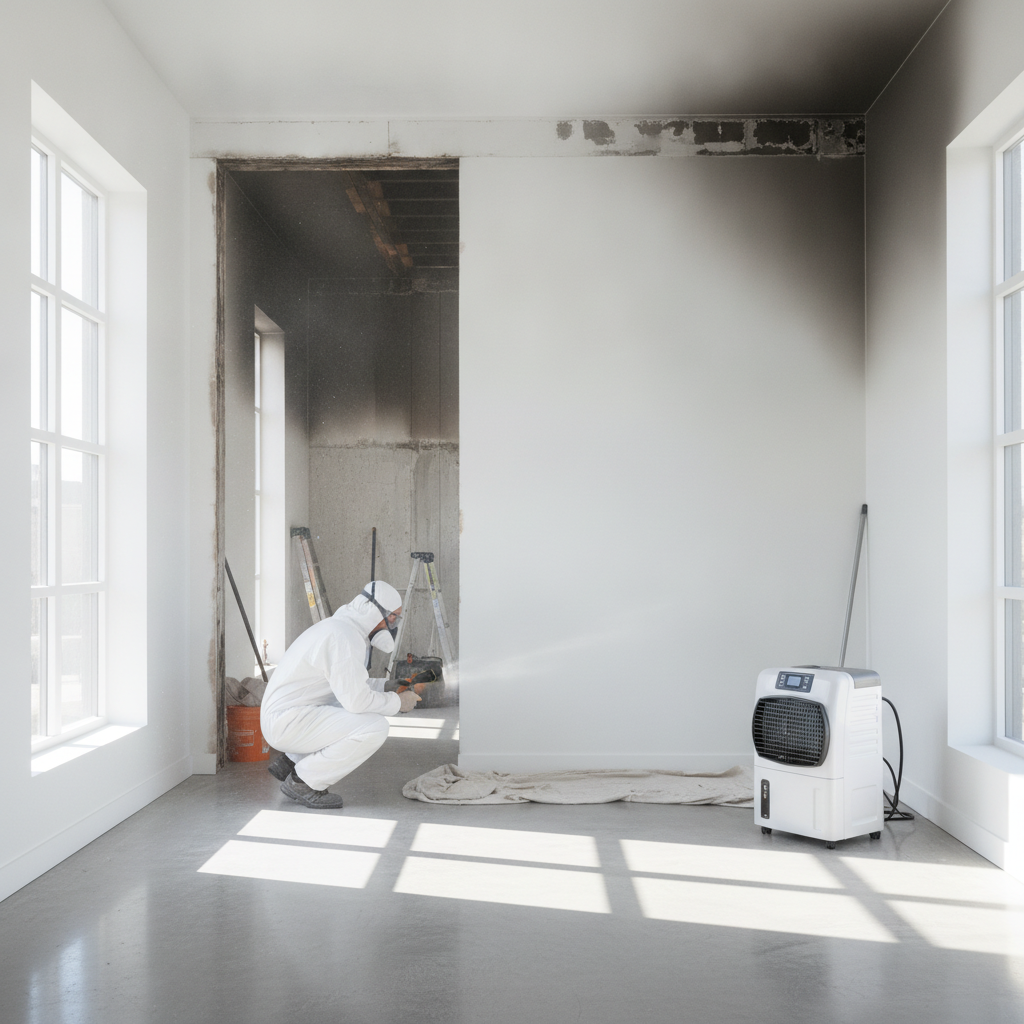
Air movers push dry air across wet surfaces, while commercial dehumidifiers pull moisture out of the air so evaporation continues. Placement matters enormously. Equipment positioned poorly can leave dead zones where air stagnates and moisture hangs around. Technicians monitor readings daily and adjust the setup until materials reach their normal dry standard.
Smoke odor complicates things, because heavy air circulation can spread soot particles if the space has not been cleaned first. A skilled crew balances airflow with air filtration, often running HEPA air scrubbers alongside drying equipment. For owners comparing providers, it helps to look for Bloomfield Hills MI fire damage restoration services that document moisture readings throughout the drying period, since that record shows the structure was actually dried to a safe level rather than just assumed to be dry.
Why a Damaged Roof Can Undo Your Drying Efforts
Here is a detail that catches many owners off guard. If the fire compromised the roof, even a small opening can let rain and humidity back into a space you are working hard to dry. All the extraction and dehumidification in the world will struggle against fresh water arriving from above every time a storm rolls through.
That is why emergency board-up and tarping often happen early in the recovery sequence, sealing the building envelope so interior drying can actually succeed. It is also a good reminder that roof condition affects interior moisture year-round, not only after a fire. Reading about Why Summer Heat Still Matters for Bloomfield Hills Roofing Performance can help owners see how roofing and moisture control connect throughout the seasons.
Once the structure is secured, drying progress becomes far more predictable. Without that seal, restoration crews may find readings that refuse to drop, forcing repeated visits and extending the window in which mold can quietly establish itself behind finishes you thought were saved.
Cleaning Soot and Residue That Feeds Mold
Soot is not just a cosmetic nuisance. It is a fine, oily residue that clings to surfaces and provides organic material mold can use as food. Leaving it on damp surfaces gives growth a head start, so cleaning and drying must work together rather than as separate, disconnected phases.
Different residues require different approaches. Dry sponges lift light, dry soot from walls and ceilings without smearing it. Wet cleaning with specialized detergents handles heavier, oily deposits. Abrasive techniques or media blasting may be used on structural wood with deep staining. The goal is to remove the residue completely instead of just masking it with paint.
Another subtle point is that moisture and smoke odor often travel together. When a restoration team cleans surfaces thoroughly and dries them completely, they reduce both the mold risk and the lingering smell in one effort. Skipping steps to save time usually leads to callbacks, because trapped residue under fresh paint can bleed through and dampness can restart growth months later.
Protecting Air Quality During Cleanup
Mold prevention is partly about what happens in the air. Disturbing wet or contaminated materials can send spores and particles floating through the building, spreading the problem to rooms that were previously clean. Good restoration practice controls that spread from the start.
Containment is the main tool. Technicians hang polyethylene barriers, seal vents, and use negative air pressure to keep affected areas isolated. HEPA filtration captures fine particles, and workers wear protective gear so they do not carry contamination from room to room. These steps may look like overkill from the outside, but they are what keep a localized problem from becoming a whole-building one.
Your HVAC system deserves special attention. Ductwork can carry smoke particles and moisture to every corner of a building, so it is typically shut down during demolition and inspected or cleaned before being restarted. Running a contaminated system can redistribute soot and spores broadly, undoing much of the careful work that happened in the affected zones.
A Quick Comparison of Mold Risk by Material
Not every material behaves the same way once it gets wet. Knowing the general differences helps explain why restoration teams make the choices they do about what to dry and what to discard.
| Material | General Mold Risk When Wet | Typical Approach |
|---|---|---|
| Drywall | High, paper facing feeds growth | Often removed if saturated |
| Insulation | High, holds moisture | Typically replaced |
| Carpet padding | High, absorbent | Usually discarded |
| Framing lumber | Moderate, dries well | Dried in place and cleaned |
| Concrete and tile | Low, nonorganic | Cleaned and dried |
Antimicrobial Treatment and Moisture Monitoring
After cleaning and drying, many restoration teams apply an antimicrobial treatment to surfaces that were exposed to moisture. These products are designed to inhibit mold and bacteria on cleaned materials, adding a protective layer while finishes are being rebuilt. They are a supplement to proper drying, never a substitute for it.
Monitoring is the quiet hero of the process. Technicians return day after day to record moisture content in affected materials, compare it against dry reference points, and adjust equipment. Drying is considered complete only when readings meet target values, not when the room merely feels dry to the touch.
For owners, asking to see this monitoring log is a smart move. It shows exactly how the structure responded and gives you documentation that can support an insurance claim. Think of it as a receipt proving that the invisible work was actually done. If mold concerns come up later, those records can help clarify what was addressed and when, protecting both you and your property.
Warning Signs Mold Is Already Developing
Even with fast action, it helps to know the signals that moisture is still lurking. The most obvious is a musty, earthy smell that lingers after cleaning, especially in closets, basements, or behind furniture. Smoke odor can mask this at first, so keep paying attention as the smoke smell fades.
- Discolored spots on walls, ceilings, or baseboards that grow over time
- Paint or wallpaper that bubbles, peels, or warps
- Persistent condensation on windows or cold surfaces
- Unexplained allergy-like symptoms such as sneezing or irritated eyes when indoors
- Soft, spongy, or swollen drywall and trim
If you notice any of these, avoid trying to scrub or bleach the area yourself, which can disturb spores and push moisture deeper into porous materials. Call a professional to assess the space. Catching a problem early, while it is still limited to a small area, keeps the repair simple and far less disruptive than waiting until growth spreads across a larger section.
Smart Steps Owners Can Take Right Away
While you wait for professionals to arrive, a few careful actions can limit moisture damage. Stay out of the structure until it has been cleared as safe, since fire-weakened floors and lingering hazards are real risks. If you can enter safely, remove wet items like rugs, cushions, and loose belongings, and move them to a dry area.
Improve airflow where it is safe to do so by opening windows if the weather is dry, and avoid running the central heating or cooling system if smoke may have entered the ducts. Take photographs of everything before moving or discarding items, because clear documentation supports your claim later.
Business owners should also think about continuity. Wet inventory, paper records, and equipment can deteriorate fast, and some items, including Smoke-Damaged Electronics: What Bloomfield Hills Property Owners Should Know, need specialized handling to avoid corrosion. Prioritize what matters most, and let your restoration team guide the rest so you do not accidentally worsen the damage while trying to help.
Final Thoughts
Fire recovery is really a two-part story. The first part is the fire itself, with its char, soot, and smoke. The second part, easy to overlook, is the water and humidity left behind by suppression efforts. Treat only the first part, and you may find yourself facing a mold problem weeks or months later, often in places that are expensive and disruptive to reach.
The good news is that mold after a fire is highly preventable when the right steps happen in the right order. Fast water extraction, mapped moisture, careful removal of saturated materials, thorough soot cleaning, controlled drying, air quality protection, and documented monitoring all work together to close the window mold needs. Each step supports the next, which is why a coordinated professional approach tends to outperform piecemeal efforts.
If you own a home, a shop, or a larger property in the area, the best move is to act early and ask questions. Request moisture documentation, understand what is being removed and why, and make sure the building envelope is secure before rebuilding begins. Mold prevention is not an optional add-on to fire recovery. It is built into doing the job properly, and it protects your health, your investment, and your peace of mind long after the smoke has cleared.